Commercial food waste & organics diversion addresses the heaviest, densest component of a kitchen waste stream before it reaches standard municipal dumpsters. Saturated organic debris weighs roughly 1,000 to 2,000…
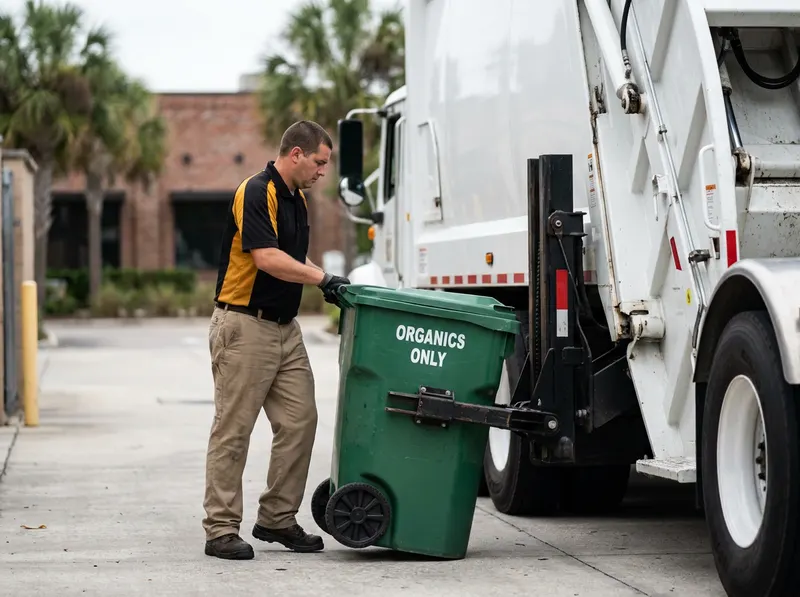
Commercial food waste & organics diversion addresses the heaviest, densest component of a kitchen waste stream before it reaches standard municipal dumpsters. Saturated organic debris weighs roughly 1,000 to 2,000 pounds per cubic yard, which causes standard solid waste dumpsters to exceed municipal hauling weight limits rapidly and trigger steep per-ton overage penalties. Placing raw food scraps into regular commercial dumpsters in the Central Florida climate accelerates pest infestation, anaerobic odor production, and dumpster pad staining. Diverting kitchen waste into gasketed 64-gallon carts isolates organic liquids, locks out flies, and channels nutrient-dense material away from municipal solid waste incinerators and landfills directly into regional Florida agricultural composting sites.
Selecting dedicated organics routing requires assessing back-of-house storage capacity against prep volume. A high-turnover dining room or hotel banquet kitchen near the Orange County Convention Center or downtown Orlando along Orange Avenue generates several tons of prep scrap weekly; this volume requires three to five 64-gallon toters serviced on an alternating two-day schedule. Neighborhood operations, such as independent bakeries in Audubon Park or neighborhood cafes in College Park, typically divert all prep trimmings and coffee waste through one or two toters serviced once per week. The operational trade-off centers on floor space and sorting discipline: dedicated organics carts occupy interior prep space or corral footprints and require kitchen staff to eliminate contamination from plastic film, latex gloves, and metal foil, but they substantially reduce standard municipal trash pull counts and eliminate dumpster pad sanitation issues.
Service routes accommodate specific site logistics across Greater Orlando commercial corridors. Properties in tight urban footprints like Thornton Park and Delaney Park utilize roll-out carts that fit through standard 36-inch kitchen doors and service corridors, whereas large-volume distribution centers and supermarkets in MetroWest or SODO can stage static locking bins inside exterior corrals. To ensure reliable operations, routes follow three concrete steps: 1. Kitchen volume auditing determines bin requirements and staging placement on flat concrete pads; 2. Clean, seal-gasketed containers are delivered directly to the loading dock or service alcove; 3. Dedicated collection trucks tip and sanitize the carts on a fixed weekday schedule, leaving empty, deodorized bins ready for immediate prep shifts.
Every job gets a firm, written price after a free on-site visit.
Tell us about your commercial food waste & organics diversion job in Orlando and we'll send a clear, written quote, usually the same day.
 Sunshine Dumpster Rental