Managing solid waste across large residential facilities requires direct matching between container capacity and unit density. In high-density rental corridors like MetroWest and Rosemont, central dumpster enclosures…
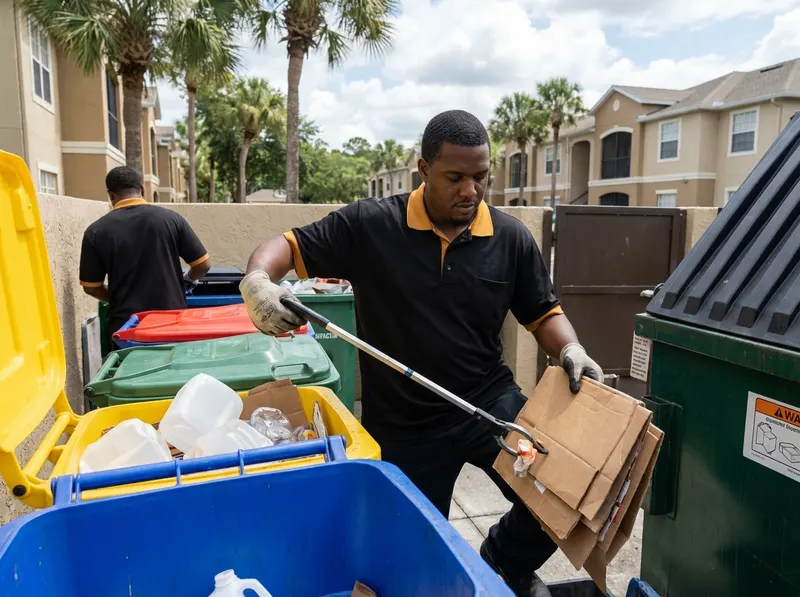
Managing solid waste across large residential facilities requires direct matching between container capacity and unit density. In high-density rental corridors like MetroWest and Rosemont, central dumpster enclosures frequently overflow between municipal pickup cycles due to continuous resident turnover. Staging dedicated 20-yard or 30-yard temporary roll-off containers inside service bays prevents waste build-up on curb lines and prevents code enforcement fines under municipal residential guidelines. For garden-style properties in Baldwin Park and Lake Nona, tight alleyways and finished brick pavers require trucks equipped with wood-board blocking under steel wheels to distribute up to 4 tons of metal weight safely across asphalt and concrete walkways without causing surface cracks.
Property managers face a balance between container footprint and haul schedule frequency. Placing a compact 10-yard bin inside a parking stall preserves valuable resident vehicle spaces, yet it requires multi-weekly pickups if tenant eviction turnover spikes. Deploying a larger 30-yard roll-off absorbs heavy structural furniture, sofas, and cabinetry during major interior capital renovations, but requires an open 40-foot straight pull-off lane for the dispatch hoist to tilt and lower the bed cleanly. Step one involves identifying dedicated staging zones outside gated security loops. Step two establishes baseline weight allowances to prevent mixed disposal overages. Step three schedules cyclical swaps timed specifically around end-of-month move-out peaks.
In historic neighborhoods like Thornton Park, Delaney Park, and College Park, multi-family waste handling encounters tight tree canopies, narrow lateral streets, and low utility clearance. Delivery rigs need a minimum vertical clearance of 14 feet and horizontal gate widths of at least 10 feet to drop bins safely. Facilities near the SODO district and Audubon Park that generate recurring corrugated packaging benefit from segregated cleanout bins to divert rigid paper packaging away from standard municipal hoppers. Clear flat-rate agreements eliminate third-party broker surcharges by covering delivery, scheduled pick-up, and stated disposal thresholds in a single verified quote, backed on-site by physical weight tickets from certified area transfer stations.
Every job gets a firm, written price after a free on-site visit.
Tell us about your multi-family property waste & recycling management job in Orlando and we'll send a clear, written quote, usually the same day.
 Sunshine Dumpster Rental