Commercial front-load waste collection operates as a permanent containment system for businesses, differing structurally from temporary open-top roll-off dumpsters used on active job sites. Front-load containers…
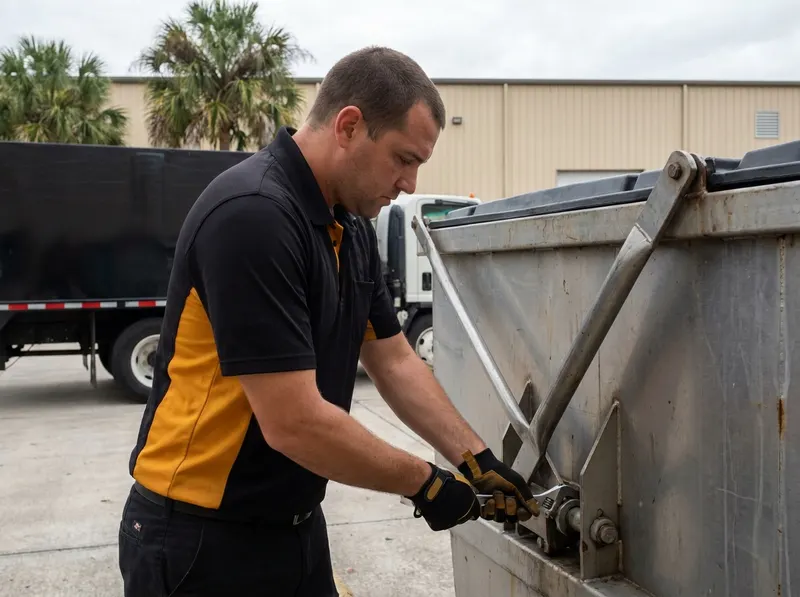
Commercial front-load waste collection operates as a permanent containment system for businesses, differing structurally from temporary open-top roll-off dumpsters used on active job sites. Front-load containers feature sloped tops with lockable composite plastic lids designed to keep rain out and prevent pest access behind restaurants, multi-tenant retail strips, and commercial offices. A front-load container sits on a permanent concrete enclosure pad, whereas a roll-off dumpster drops on a temporary driveway or staging lane for short-term demolition. The operational trade-off is fixed capacity versus bulk volume: front-load bins require consistent waste distribution without exceeding the container rim, whereas larger roll-offs handle variable, dense construction rubble. Enclosure dimensions must provide at least 14 feet of overhead clearance and a 12-foot-wide approach gate to accommodate hydraulic lift forks safely.
Route placement across Orlando accounts for dense urban corridors and strict municipal enclosure codes. Properties along Orange Avenue in SODO and strip centers on MetroWest Boulevard require designated access lanes that remain clear of delivery vans during scheduled collection windows. Facilities in Baldwin Park and College Park typically utilize 4-yard or 6-yard bins hidden inside masonry enclosures matching neighborhood architectural guidelines. For high-volume dining establishments in Thornton Park and Delaney Park, container sizes must balance kitchen refuse output with tight alleyway turnarounds, where trucks need a 45-foot turning radius to hook fork sleeves. Locations near Lake Nona medical plazas or light-industrial warehouses off Rosemont often stage 8-yard containers to handle corrugated packaging alongside daily office refuse without triggering overflow fees from Orange County code enforcement.
1. Select container capacity ranging from 2 to 8 yards based on peak weekly output. 2. Verify enclosure access clearance, confirming overhead tree lines along corridors like Corrine Drive in Audubon Park remain trimmed above 14 feet. 3. Establish a weekly pickup frequency of 1 to 5 cycles per week to prevent bin overfilling and ensure steady site hygiene.
Every job gets a firm, written price after a free on-site visit.
Tell us about your commercial front-load dumpster service job in Orlando and we'll send a clear, written quote, usually the same day.
 Sunshine Dumpster Rental